
 By
By 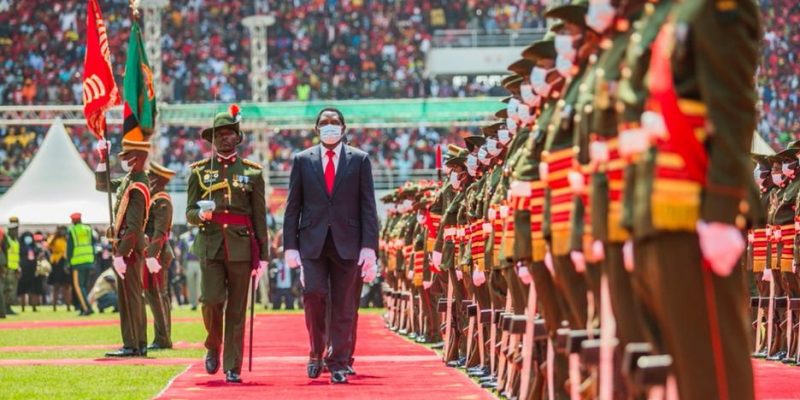
The newly elected Zambian President, Hakainde Hichilema says his administration has inherited an “empty treasury” after discovering that “horrifying” amounts of money have been stolen by the previous Patriotic Front government.
In an interview with the BBC, the president said that Edgar Lungu’s government had not “fully disclosed” the scale of Zambia’s debt, describing the country’s treasury as “literally empty”.
HH said that officials were “still trying to make last-minute movements of funds, which are unauthorized” even after more than two weeks have passed since the election.
HH was speaking in an interview with the BBC, where he said that Edgar Lungu’s government had not “fully disclosed” the scale of Zambia’s debt, describing the country’s treasury as “literally empty”.
“The hole is much bigger than we expected,” said HH. “There’s been a lot of damage, unfortunately”.
He promised that his government would take a zero tolerance approach to corruption and would soon get to the bottom of the illicit movement of funds.
“I don’t want to pre-empt things but what we are picking [up] is horrifying,” he said.
“You’ll feel nobody can do a thing like that but it’s being done. People have done it. They are still trying to do things now.”
HH said his government was also committed to restoring Zambia’s credibility amongst lenders, following the disastrous tenure of the PF which saw the country default on its foreign debts.
The president said his government would enter into talks with China, which he was confident would “understand that we’ve inherited a very difficult situation”.
There are early signs that Zambia’s economy is starting to recover, with the Kwacha surging 21% against the dollar since HH became president. Foreign investors are now flocking to buy up Zambia’s debts, with the Bank of Zambia raising K2.5 billion at a bond auction on Friday.