
 By
By 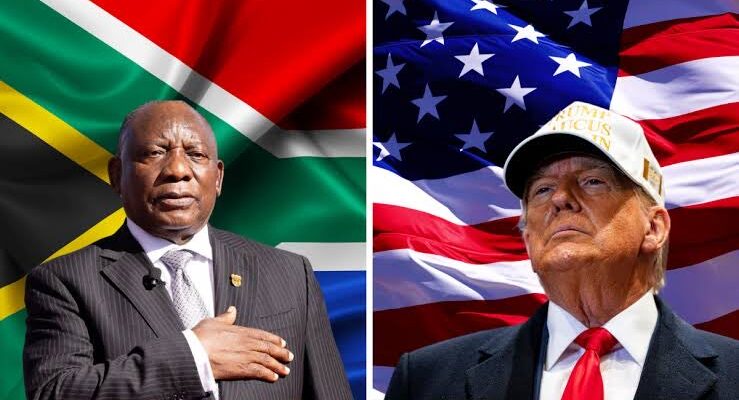
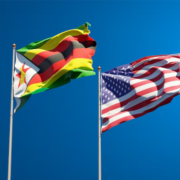
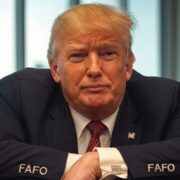
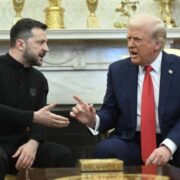
The recent decision by U.S. President Donald Trump to freeze aid to South Africa marks a significant moment in U.S.-Africa relations. Citing concerns over land expropriation and alleged mistreatment of minority farmers, Trump’s move aligns with his broader economic and geopolitical strategy often referred to as Trumpnomics.
This approach, characterized by nationalism, economic protectionism, and a transactional foreign policy, has profound implications for African economies, particularly nations that challenge U.S. influence.
South Africa: A Target for U.S. Retaliation?
Trump’s decision to punish South Africa extends beyond the Expropriation Act of 2024. Several key geopolitical and economic factors likely contributed to his stance:
1. South Africa’s Support for Palestine and Its ICC Case Against Israel
South Africa has taken a leading role in global advocacy for Palestine, most notably by initiating a case against Israel at the International Court of Justice (ICJ) over alleged crimes against humanity in Gaza. This case, filed in December 2023, accuses Israel of genocide against Palestinians (International Court of Justice, 2023).
On February 7, 2025, Trump announced that the U.S. would be freezing aid to South Africa, with the White House citing the country’s support for “bad actors” on the world stage, a veiled reference to South Africa’s stance against Israel. This move follows bipartisan pressure in the U.S. to take a harder line against countries backing Palestine (Politico, 2025).
2. South Africa’s Opposition to the M23 Insurgency and Alleged Western Complicity in the DRC Conflict
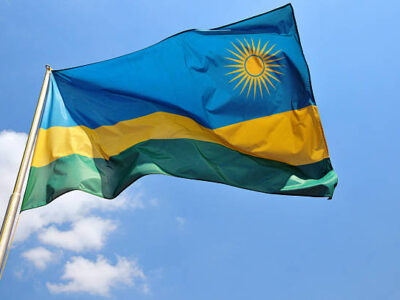
The Democratic Republic of the Congo (DRC) has long suffered from resource-driven conflicts, with Rwanda being accused of backing the M23 rebel group. Reports from the United Nations and independent human rights organizations have linked M23’s activities to the illicit exploitation of Congolese minerals, which ultimately benefits multinational corporations in Western nations (United Nations Security Council, 2023).
South Africa has aligned itself with the DRC, condemning external interference, particularly from Rwanda, which is seen as a Western ally. By supporting the DRC’s sovereignty and opposing resource exploitation, South Africa has positioned itself against Western economic interests (BBC News, 2024).
3. South Africa’s Strategic Alignment with BRICS and De-Dollarization Efforts
As a key member of the BRICS alliance (Brazil, Russia, India, China, and South Africa), South Africa has been part of efforts to reduce reliance on the U.S. dollar in international trade. At the 2023 BRICS Summit in Johannesburg, leaders reaffirmed their commitment to exploring alternative financial mechanisms, including a potential BRICS currency (Reuters, 2023).
The U.S. sees South Africa as the weakest link in the BRICS coalition and is likely using economic pressure to fracture the bloc’s unity. Trump’s renewed stance against South Africa aligns with his administration’s broader hostility toward BRICS and its efforts to undermine U.S. financial dominance (Financial Times, 2023).
The Expropriation Act: A Convenient Excuse?
While Trump and his allies, including South African-born billionaire Elon Musk, have framed their opposition to South Africa around land reform, the reality is far more complex.
On January 24, 2025, the South African government officially published the Expropriation Act 13 of 2024, which aims to regulate property expropriation for public purposes or in the public interest. The act provides a framework for land redistribution and includes provisions where compensation may be reduced or set to zero in cases of abandoned land or state-owned properties (Government of South Africa, 2025).
Despite Trump’s claims, South African President Cyril Ramaphosa has repeatedly emphasized that the law is not a tool for mass confiscation but rather a means to address historical land ownership disparities. On February 3, 2025, Ramaphosa responded to Trump’s accusations, asserting that “the government has not confiscated any land” and calling the allegations “a misrepresentation of South Africa’s policies” (The Guardian, 2025).
Recent Developments in 2025: U.S. Retaliation Escalates
On February 7, 2025, Trump signed an executive order freezing all U.S. aid to South Africa. The White House’s statement framed this decision as a response to “violent attacks on innocent disfavored minority farmers,” echoing longstanding but widely debunked narratives of white genocide in South Africa (Politico, 2025).
Additionally, Trump announced a controversial resettlement program for white South African farmers, suggesting they could be accepted as refugees in the U.S. This move has sparked global debate, with critics arguing it reflects a racially selective immigration policy that disregards the broader socioeconomic challenges in South Africa (The Guardian, 2025).
Meanwhile, the legal battle over Trump’s foreign aid policies is intensifying. On February 7, 2025, a federal judge temporarily blocked the administration’s efforts to dismantle USAID following a lawsuit by U.S. federal workers’ unions. The case could impact Trump’s ability to unilaterally cut aid to South Africa and other countries (The Guardian, 2025).
Potential Economic Fallout for South Africa and Africa
1. Loss of U.S. Aid and Investment
While U.S. aid to South Africa is not as substantial as that provided to other African nations, a complete cut-off could impact sectors like health (HIV/AIDS programs), education, and economic development initiatives. In 2023, U.S. foreign assistance to South Africa totaled approximately $500 million, largely focused on health initiatives such as the President’s Emergency Plan for AIDS Relief (PEPFAR) (USAID, 2023).
Additionally, U.S. investors may become wary of South Africa, leading to potential capital outflows and increased economic uncertainty.
2. Increased Western Political and Economic Isolation
• South Africa may face additional trade barriers, sanctions, or diplomatic pressure from Western nations.
• Western businesses may reconsider long-term investments in South Africa, citing political risks (The Economist, 2025).
3. Strengthening of South Africa’s Ties with BRICS and Other Emerging Markets
• The more South Africa is alienated by the West, the more it will turn toward China, Russia, and other BRICS partners for economic and political support.
• South Africa could deepen trade relations with nations that share its vision for a multipolar world order, reducing its reliance on the West (BRICS Policy Center, 2025).
4. Impact on Other African Nations
• The Trump administration’s hostility toward South Africa could set a precedent for other African nations pursuing land reform or policies that challenge Western interests.
• Countries aligned with BRICS or those advocating for economic sovereignty may also face similar economic threats from the U.S. in the future.
A Shift in Global Power Dynamics?
Trump’s latest move against South Africa underscores the broader shifts in global power dynamics. As African nations assert more independence in international affairs, they will likely face increasing pressure from Western powers seeking to maintain their influence. However, South Africa’s resilience and strategic partnerships with BRICS and other Global South allies could ultimately reshape the geopolitical and economic landscape in Africa.
If South Africa weathers this storm, it may set a precedent for other African nations to resist Western economic coercion, further accelerating the decline of U.S. hegemony on the continent.
References:
1. Politico. (2025). Trump freezes aid to South Africa over land expropriation law.
2. The Guardian. (2025). U.S. judge blocks Trump’s effort to dismantle USAID amid South Africa aid row.
3. Government of South Africa. (2025). Expropriation Act 13 of 2024 published.
4. The Economist. (2025). Trump’s Economic Warfare: The Next Phase in U.S.-Africa Relations.
5. BRICS Policy Center. (2025). South Africa’s Role in BRICS and Global Economic Shifts.