
 By
By 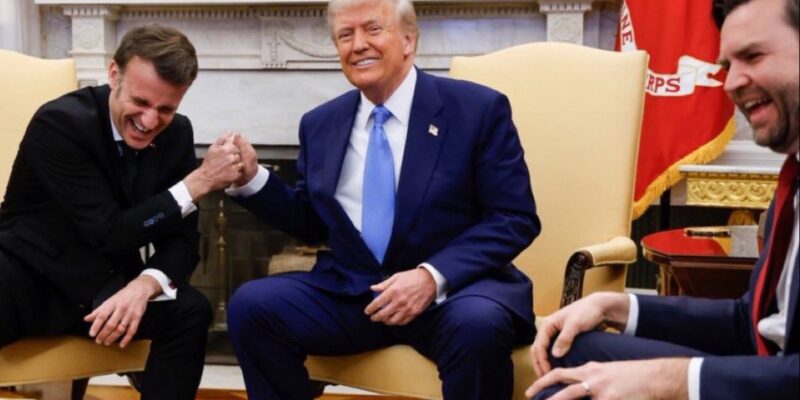
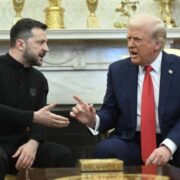
In a striking display of diplomatic assertiveness, French President Emmanuel Macron confronted former U.S. President Donald Trump during a recent press conference, challenging Trump’s claims regarding European aid to Ukraine and reinforcing the narrative that Russia bears responsibility for the ongoing conflict.
In a moment that drew significant attention, Trump attempted to downplay Europe’s contributions to Ukraine’s defense, stating, “Europe is loaning the money to Ukraine. They get their money back.” Macron seized the opportunity to refute this claim, asserting, “No, in fact. To be frank, we paid. We paid 60% of the total effort.” His sharp correction not only highlighted Europe’s substantial financial commitment but also served as a pointed reminder of the importance of international solidarity in facing aggression.
Macron’s statements were underscored by his strong conviction that Russia, under the leadership of President Vladimir Putin, is the true instigator of the conflict, thus emphasizing the need for the aggressor to be held accountable.
He suggested that compensation for Ukraine should come from Russia, not the countries that have supported it. “I support the idea of Ukraine being compensated first,” Macron stated, echoing the sentiment that those who initiated the conflict bear the responsibility for its consequences.
During the press conference, Macron also commended the “courage of the Ukrainian people” in their resistance against Russian military actions, remarking, “No one in this room wants to live in a world where … international borders can be violated from one day to the next by anyone.” His resolute stance resonated with many observers, positioning Macron as a leading voice of diplomatic strength in a challenging global landscape.
Despite the tension, Trump’s demeanor remained notably relaxed, with a smile that belied the gravity of the discussion. The juxtaposition of Macron’s assertiveness against Trump’s casual deflection accentuated the ongoing struggle for accurate representation of facts in international discourse. Macron’s ability to fact-check Trump in real-time marked a rare moment in which a world leader effectively challenged the former president, asserting European contributions against the backdrop of Trump’s familiar narrative.
The encounter further establishes Macron as a formidable figure in international relations, one who balances respect with the courage to confront inaccuracies head-on. His remarks, particularly regarding his previous discussions with Putin after the Bucha massacre, demonstrate a decisive approach to diplomacy that prioritizes both principle and pragmatism.
As global leaders navigate the complexities of international aid and security, Macron’s direct approach serves as a reminder of the necessity for clarity and accountability in addressing conflicts born from aggression. The assertive stance taken by Macron in this meeting offers a model for leadership, emphasizing that diplomacy need not be synonymous with submission.