

 By
By 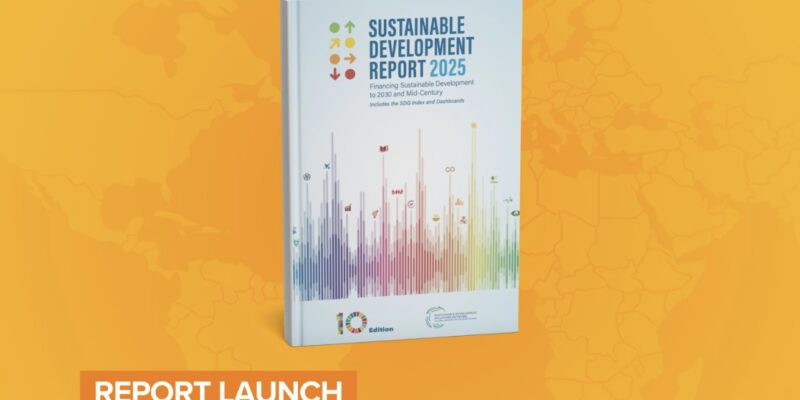
Paris, France, June 24, 2025 — A decade after the United Nations adopted the Sustainable Development Goals (SDGs), the world remains steadfast in its commitment to these ambitions, though progress is alarmingly off-track, with only 17% of targets projected to be achieved by 2030. The 10th edition of the Sustainable Development Report (SDR), released today by the UN Sustainable Development Solutions Network (SDSN), highlights persistent challenges, including declining support for UN-based multilateralism by major powers and insufficient fiscal resources, particularly in emerging and developing economies (EMDEs).
The report, available in 11 languages and accessible online at sdgtransformationcenter.org, introduces the SDG Index (SDGi), ranking all 193 UN Member States on their performance across the 17 Goals using 17 headline indicators. It also features a new Index of countries’ support for UN-based multilateralism (UN-Mi), spotlighting nations’ engagement with the UN system. The findings come ahead of the 4th International Conference on Financing for Development (Ff4D) in Seville, Spain (June 30 – July 3, 2025), where urgent reforms to the Global Financial Architecture (GFA) will be discussed to unlock financing for sustainable development.
Key Findings
1. High Global Commitment to SDGs: 190 UN Member States have participated in the Voluntary National Review (VNR) process since 2015, with 39 countries set to present VNRs in 2025. Only Haiti, Myanmar, and the United States have not participated. Subnational efforts are also growing, with many regional and local governments submitting Voluntary Local Reviews (VLRs).
2. Regional Progress and Disparities: Nordic countries—Finland (#1), Sweden (#2), and Denmark (#3)—top the SDG Index, though they face challenges from unsustainable consumption. East and South Asian nations, including Nepal (+11.1 points), Cambodia (+10), and Bangladesh (+8.3), show the fastest progress since 2015. Other notable performers include Benin (+14.5), Uzbekistan (+12.1), and the UAE (+9.9). China (#49) and India (#99) enter the top 50 and 100, respectively.
3. Stalled Global Progress: None of the 17 SDGs are on track for 2030. Five targets—obesity rates (SDG 2), press freedom (SDG 16), sustainable nitrogen management (SDG 2), biodiversity (SDG 15), and corruption perception (SDG 16)—are in significant reversal. Progress is evident in areas like mobile broadband use (SDG 9), access to electricity (SDG 7), and under-5 mortality (SDG 3), but global tensions and declining development finance threaten future gains.
4. Multilateralism Under Strain: The UN-Mi Index ranks Barbados, Jamaica, and Trinidad and Tobago as the top supporters of UN-based multilateralism. Brazil leads G20 nations at #25, while Chile ranks highest among OECD countries at #7. The United States, having withdrawn from the Paris Climate Agreement and the World Health Organization and opposing the SDGs, ranks last (#193).
5. Urgent Need for Financial Reform: Half the world’s population lives in countries unable to invest adequately in sustainable development due to debt burdens and limited access to affordable capital. The report calls for GFA reforms at Ff4D to redirect financing toward EMDEs and global public goods.
Expert Insights
Professor Jeffrey D. Sachs, SDSN President and lead author, emphasized the SDGs’ role as a pathway to peace, equity, and well-being. “Many countries are making significant progress, but much more can be accomplished through stepped-up investments in education, green technologies, and digital solutions,” Sachs said. “Above all, we need peace and global cooperation to achieve the SDGs.”
Data and Resources
The SDR, supported by over 200,000 data points, provides detailed country and regional profiles via interactive dashboards at dashboards.sdgindex.org and dashboards-unmi.sdgindex.org. The report, titled Financing Sustainable Development to 2030 and Mid-Century, is authored by Sachs, Guillaume Lafortune, Grayson Fuller, and Gabriel Iablonovski (DOI: 10.25546/111909).
About SDSN
Operating under the UN Secretary-General since 2012, the SDSN mobilizes scientific and technological expertise to advance sustainable development. Its SDG Transformation Center produces the SDR and provides tools for SDG implementation. For more, visit unsdsn.org.
Contacts:
Alyson Marks, Head of Communications, alyson.marks@unsdsn.org
Guillaume Lafortune, Vice President, guillaume.lafortune@unsdsn.org