
 By
By 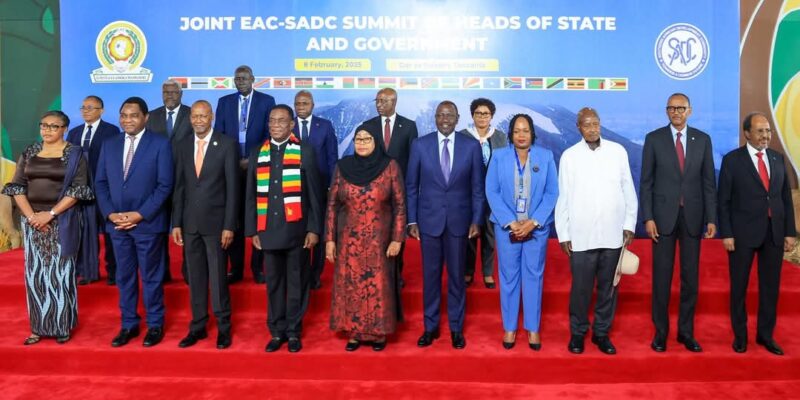
EAC-SADC Joint Summit Issues Urgent Directive on DRC Crisis
Dar es Salaam, Tanzania – February 8, 2025
In an unprecedented show of regional unity, leaders from the East African Community (EAC) and the Southern African Development Community (SADC) convened today in Dar es Salaam to address the escalating security crisis in the Democratic Republic of the Congo (DRC). The Joint EAC-SADC Summit of Heads of State and Government, co-chaired by Kenyan President William Ruto and Zimbabwean President Emmerson Mnangagwa, issued a series of urgent resolutions to halt violence, secure humanitarian relief, and promote a diplomatic path to peace.
Key Resolutions from the Summit:
1. Call for Immediate Ceasefire and Humanitarian Support
The summit expressed grave concern over the deteriorating security situation in Eastern DRC, where continued hostilities have led to mass displacement, humanitarian crises, and attacks on civilians. The leaders emphasized:
• Immediate and unconditional ceasefire by all armed groups.
• Restoration of essential utilities and supply lines to provide food and medical aid.
• Protection of diplomatic missions and embassies in Kinshasa from violent attacks.
2. Strengthening Regional Military and Security Coordination
The Joint Summit directed EAC and SADC Chiefs of Defense Forces to meet within five (5) days to develop a technical roadmap addressing:
• The immediate cessation of hostilities and a sustainable peace plan.
• The securitization of Goma and surrounding areas to prevent further escalation.
• The reopening of critical supply routes and Goma Airport to facilitate humanitarian access.
• Humanitarian repatriation and evacuation of the deceased and injured.
3. Merging the Luanda and Nairobi Peace Processes
In a landmark decision, the Summit resolved to merge the Luanda and Nairobi peace processes into a unified framework. The co-chairs, in consultation with the African Union (AU), will appoint additional facilitators from across Africa to oversee this process.
4. Engaging All Stakeholders, Including M23
The Summit mandated the resumption of direct negotiations with all state and non-state actors, including M23 rebels, under the new Luanda/Nairobi framework.
5. Roadmap for Withdrawal of Foreign Forces
Acknowledging concerns over foreign military interventions, the Summit directed that a withdrawal plan for all uninvited foreign armed forces in the DRC be developed and implemented immediately.
6. Strengthening Peace and Security Monitoring
The Summit instructed a Joint Meeting of Ministers within 30 days to:
• Review the security situation and the ceasefire report from regional military chiefs.
• Establish a technical coordination mechanism for monitoring implementation.
• Develop a long-term peace and development roadmap with clear financing mechanisms.
A Unified African Response
The Joint Summit reaffirmed Africa’s commitment to regional stability, emphasizing that a political and diplomatic solution is the only sustainable path to ending the DRC crisis. Chairperson of the African Union Commission, Moussa Faki Mahamat, was present at the meeting, reinforcing the AU’s support for the resolutions.
This historic summit marks a turning point in Africa-led conflict resolution, signaling a united front against instability and external interference in the region. The next 30 days will be crucial as regional leaders work toward implementing these directives to secure lasting peace in Eastern DRC.
Stay tuned for more updates….