
 By
By 
After a prolonged debate that led to disruptions of proceedings, the executive council of the African Union adopted a resolution to apply the principle of rotation to the Pan-African Parliament’s presidency, which will provide all regions with an equal opportunity to lead.
The fourth ordinary session of the fifth PAP, held in May/June in Johannesburg, South Africa, exploded in disorder, with some members refusing to allow elections of the new president to take place and some members citing bias, as they did not want a French-speaking person.
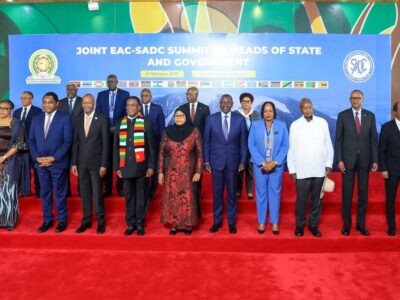
The 39th Ordinary Session of the African Union Executive Council meeting, held in Addis Ababa, Ethiopia, concluded on Friday by deliberating on various current issues that concern the continent and its members.
After several days of chaos, including physical confrontations, outbursts and disruptions, the clerk of PAP, Vipya Harawa, indefinitely postponed the proceedings.
Central to the demonstrations were Namibia’s McHenry Venaani, South Africa’s Julius Malema and Zimbabwe’s Barbara Rwodzi.
The chairperson of the Trade, Custom and Immigration Committee of PAP and the deputy leader of the Namibian delegation,
Venaani, told New Era yesterday strong recommendations were agreed upon for the rotational president of parliament to take place.
“This is a monumental success, I am glad that I led the process together with colleagues, entrusted to lead the talks with various foreign ministers and ambassadors to supports the values we are fighting for,” expressed Venaani.
He stated this is an opportunity for the north and southern African regions that did not have a chance to be given the opportunity to lead the continental body. “This is a strong diplomatic effort that we led. The leadership of PAP to southern Africa will be a democratic value system; we also want to be at the helm of that continental body, and I have been strong on making sure that Namibia participates in the quarter system,” he said.
Venaani stated that representation is important, further highlighting that Namibia has not even filled the quota by 30% of the United Nations (UN); the African Union is below 20%.
He noted: “There is no single Namibian working for PAP, so one would also be doing this for the country to have a chance to have influence in the region because it is cardinal and key for nations to have a stake at the governance of this body”. PAP, also known as the African Parliament, is the legislative body of the African Union, a platform for people from all African states to be involved in deliberations and decision-making on the problems and challenges facing the continent. Since the inception of PAP, the eastern and western caucus dominated the presidency, while the central African region had three presidential terms.
The only regions that never had the chance are the northern and southern African regions.
“The central region was only supposed to have one chance but they led for three terms, so there are only two political regions that had an opportunity to govern the affairs of the continental parliament,” recalled Venaani.
He said: “Given the opportunity to lead, the southern caucus would focus on a united Africa. We will not create a presidency that divided people through regional and language groups. We will lead through a process of democracy and consolidating the values of a parliamentary democracy on the continent”. The southern region caucus’ campaign coordinator and Zimbabwean member of parliament Rwodzi was this weekend quoted by that county’s media as saying it is a great achievement towards their fight for geographical rotation at the PAP. She added that African Union Executive Council adopted a decision to call for the principle of rotation in the election of the PAP president, which means they are inching closer to the presidency.
PAP Southern Africa caucus has nominated Zimbabwe’s Chief Fortune Charumbira as its candidate for the presidency.